- Home
- Offshore Audit Support Services in Bangalore | SGGK
Offshore Audit Support Services in Bangalore for GCCs, MNCs & CPA Firms
Cross-Border Audit Support for Group Reporting, IFRS & US GAAP Compliance
We provide offshore audit support to finance teams answering to more than one auditor, and to CPA and accounting firms needing offshore capacity for their own audit engagements. We prepare documentation, close queries, and build reporting packages in the format your overseas parent company requires with the accuracy and turnaround a cross-border audit demands.

A Smarter Approach to Audit
With deep technical knowledge and hands-on experience, we deliver rigorous audits with clear, actionable insights for your business.
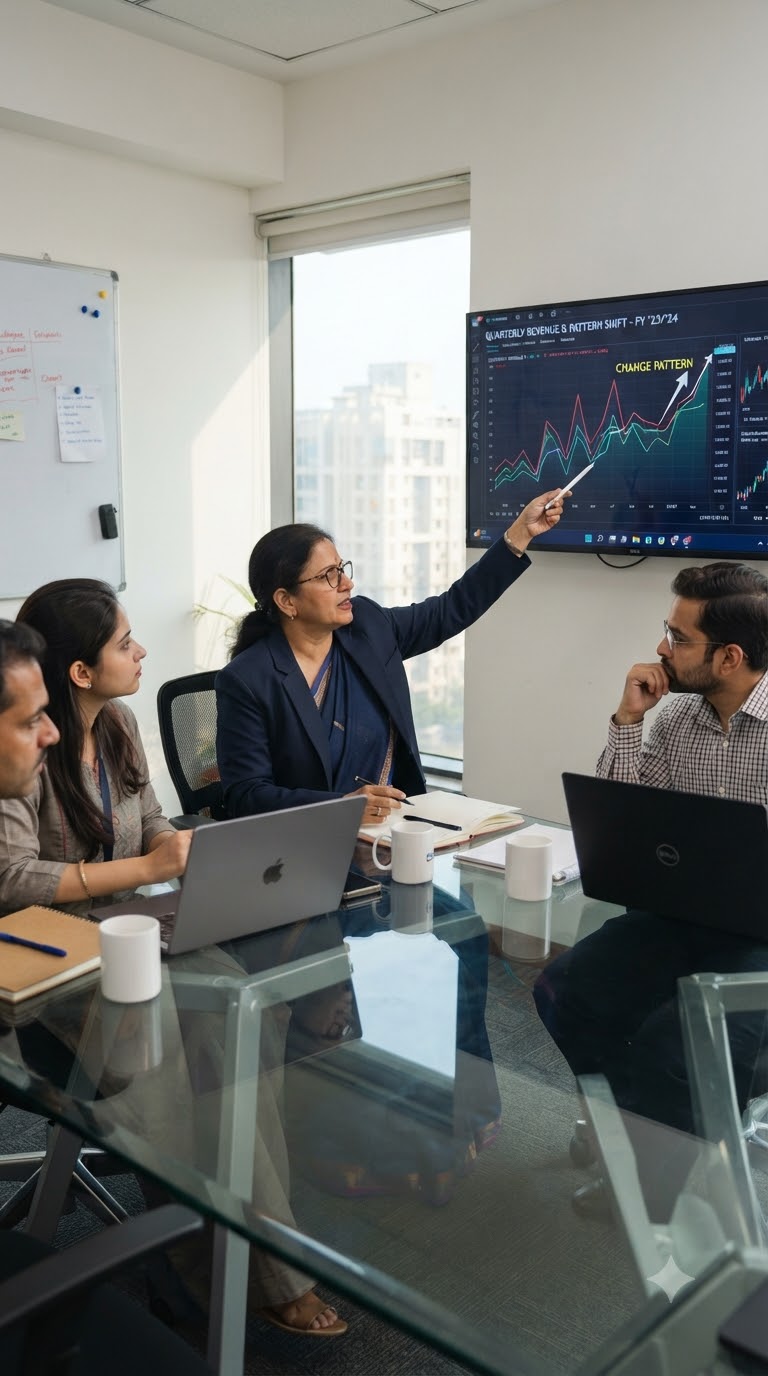
What Are Overseas Audit Support Services?
Overseas audit support is the work that makes an Indian entity’s financials usable to a foreign parent’s audit process, without touching the actual sign-off. For a GCC or Indian subsidiary, this includes:
Who Needs Audit Support Services?
- Preparing trial balances, schedules, and reconciliations in the format the group or component auditor requires
- Matching Indian statutory financials to the group's reporting framework (IFRS, US GAAP, or local GAAP)
- Responding to audit queries raised by the overseas parent's auditor
- Coordinating between the Indian statutory auditor, the group auditor, and the finance team so the two audit timelines don't clash
- Managing documentation for related-party transactions, transfer pricing support, and intercompany reconciliations
For CPA and accounting firms based outside India, this includes extending offshore team capacity to support audit engagements the firm already holds for its own clients, working under the firm’s review and methodology.
The sign-off on the Indian entity’s statutory financials stays with the entity’s appointed statutory auditor. SGGK’s work sits entirely in the layer beneath that.
Offshore Audit Support vs Statutory Audit vs Component Audit
These three engagement types are often confused, but each carries a distinct scope and sign-off.
| Type | What It Covers | Who Signs Off | Where SGGK Fits |
|---|---|---|---|
| Statutory Audit | The mandatory annual audit of the Indian entity's standalone financials under the Companies Act | The entity's appointed statutory auditor | SGGK does not perform or sign statutory audits. We prepare the supporting schedules and reconciliations if engaged to do so. |
| Component Audit | The audit of the Indian entity's financials for the purpose of group consolidation, run to the parent's audit instructions | The component auditor appointed by the group | SGGK builds the group-format reporting package and manages the query process with the component auditor. |
| Overseas Audit Support | The conversion, reconciliation, and coordination work that sits behind both the statutory and component audit when a foreign parent is involved | No sign-off; this is execution and coordination | This is SGGK's core engagement. |
If your entity needs its Indian statutory audit performed, that is a separate engagement from overseas audit support and needs an appointed statutory auditor. SGGK can advise on how the two should be structured so neither workstream stalls the other.
Who Needs Overseas Audit Support Services?
→ Indian Global Capability Centers which operate under the authority of the foreign head office.
→ Branches and Liaison Offices with the need to maintain RBI compliance in addition to auditing for the foreign parent company.
→ PE/VC Companies with additional investor reporting requirements beyond statutory audit.
→ Multinationals and holding structures with an audit trail crossing multiple jurisdictions.
→ US CPA firms/UK accounting firms and others needing offshore assistance in audits related to India-connected companies or respective offshore companies audited by CPA firms.
Why Outsource Overseas Audit Support Instead of Building an Internal Team?
The comparison comes down to cost, scalability, and continuity across an audit cycle.
| Factor | Internal Team | SGGK |
|---|---|---|
| Cost | Fixed headcount cost year-round, including during low-audit-activity months. | Engagement-based cost aligned to your audit calendar. |
| Scalability | Fixed capacity; audit season creates bottlenecks. | Team scales up during audit season and down afterward. |
| Expertise | Requires ongoing training on IFRS, US GAAP, and evolving group reporting formats. | Standing expertise across multiple reporting frameworks and jurisdictions. |
| Turnaround | Dependent on internal team bandwidth alongside day-to-day finance operations. | Dedicated audit-cycle focus with defined turnaround commitments. |
| Continuity | Vulnerable to attrition during a live audit cycle. | Institutional process continuity across audit cycles. |
What Are The Common Overseas Audit Findings in Bangalore GCCs & MNCs
The recurring issue is the lack of reconciliation, documentation, and traceability between local books and group reporting requirements.
| Finding | Why It Happens | What the Group Auditor Flags |
|---|---|---|
| Undocumented conversion entries | Adjustments from Indian rules to IFRS or US GAAP happen, but no one records why or how. | The entry can’t be traced back to source, so it gets rejected, even if correct. |
| Transfer pricing mismatch | Indian transfer pricing filings are prepared for local regulation without cross-checking against group policy. | The pricing in the Indian books doesn’t match the group’s transfer pricing records. |
| Intercompany balances that don’t tie out | The Indian entity and the parent update shared balances on different schedules. | The two sets of numbers drift apart, forcing a last-minute scramble during the audit. |
| Currency translation gaps | Period-end conversions are applied without a documented policy for which rate applies to which line item. | Inconsistent rates across the P&L and balance sheet get flagged as a red flag. |
| Related-party disclosure shortfall | Indian disclosure requirements are narrower than what group consolidation needs. | Disclosures are technically compliant in India but incomplete for the group’s consolidated statements. |
| Late-cycle template changes | The group revises its reporting template after the Indian entity has already closed its books to the old format. | Rework gets compressed into the final weeks of the audit, when there’s least time to absorb it. |

Industries We Support Across Bangalore's GCC and MNC Ecosystem
→ Banking, Financial Services & Insurance (BFSI).
→ Healthcare & Life Sciences.
→ Engineering, R&D & Product Development Centres.
→ E-commerce & Digital Platforms.
→ Manufacturing (India operations of overseas manufacturers).
Offshore Audit Support Partner in Bangalore for GCCs, CPA Firms
SGGK is based in Bangalore, one of India’s largest hubs for Global Capability Centres, multinational companies, and international finance operations.
Working with Bangalore-based finance teams and offshore CPA/accounting firm partners gives us practical insight into the reporting challenges global organisations face, including:
- Managing Indian and overseas audit timelines simultaneously
- Coordinating with Big 4 and international audit firms
- Meeting parent company consolidation requirements
- Supporting GCC-specific reporting structures
- Aligning cross-border finance processes with global standards
Our Bangalore team works with finance controllers, CFOs, CPA firm engagement partners, and global reporting teams to build audit-ready processes that support accurate reporting across jurisdictions.

Countries We Support
→ United Kingdom
→ Germany
→ Singapore
→ United Arab Emirates
→ Japan
Audit Standards We Work With
→ IFRS (International Financial Reporting Standards) - for parent companies headquartered in the UK, EU, and most non-US jurisdictions
→ US GAAP - for US-headquartered parent companies and US-listed groups
→ Ind AS - for the Indian statutory financials that form the base reporting layer
Challenges of Managing Overseas Audits from India
Managing an overseas audit from Bangalore comes with specific challenges for GCCs and multinational subsidiaries. Time zone overlap with the group auditor is often just two or three hours a day, slowing down query resolution right when the audit needs to move fastest.
Reporting calendars rarely align either: the group’s fiscal year-end is usually different from the Indian entity’s, so two audit cycles run at once instead of one after the other. Group reporting templates also change from year to year, often with little advance notice, which creates rework late in the cycle when time is already tight.
And because most India-based GCC finance teams are lean, the same people closing the books are also answering two auditors at once, which slows both processes down rather than just one.

Deliverables Included in Our Offshore Audit Support Services
| Deliverable | Description |
|---|---|
| Group reporting package | Trial balance and schedules matched to the group’s chart of accounts and reporting framework |
| Reconciliation statements | Intercompany, bank, and balance sheet reconciliations prepared to audit standard |
| Query response support | Documented responses to auditor queries, tracked to closure |
| Transfer pricing documentation support | Supporting schedules aligned to group transfer pricing policy |
| Audit timeline tracker | A shared tracker showing status against the group’s audit milestones |
Our Overseas Audit Support Services
The most efficient overseas audits begin months before auditors request their first document. SGGK treats audit readiness as a continuous reporting discipline rather than a year-end activity & hence experiences fewer audit queries, shorter close cycles, and smoother group consolidation.
Group Reporting & Audit Reporting Package
Financial Reporting Framework Alignment
Cross-Border Audit Coordination
Overseas Audit Workpapers, PBC Schedules
Intercompany Reconciliation & Group Consolidation
Overseas Auditor Query Management
Year-End & Group Consolidation Reporting
Audit Documentation Repository
Continuous Overseas Audit Readiness

1. Scoping Call
2. Readiness Assessment
3. Engagement Kickoff
4. Active Audit Support
5. Close-out and Handover
Representative Cross-Border Audit Engagements
THE PROBLEM
WHAT WE BUILT
THE RESULT
Why Global Finance Teams Choose SGGK for Offshore Audit Support
1. Big 4 Grounding, Applied to Group Reporting Standards
2. Partner-Led Across Both Audit Tracks
3. Full Cross-Border Lifecycle, Not Just
Conversion
4. GCC Structures Are Our Core Client Base, Not an Edge Case
Built for Bangalore's GCC and Technology Corridor
Bangalore is home to one of India’s largest concentrations of Global Capability Centres, and SGGK is based in the city its clients operate from. Being local to Bangalore’s GCC corridor means our team is available for in-person coordination during audit season, understands the specific compliance environment technology-sector GCCs operate under, and has direct working relationships with the auditors and advisors most active in this market.
That local presence extends into the reporting work itself: overseas audit coordination and consolidation support run alongside multi-framework reporting under IFRS, US GAAP, and Ind AS, for finance teams navigating group requirements set outside India.
From Whitefield and Electronic City to Bangalore’s wider GCC ecosystem, our team supports finance functions that report to overseas headquarters and global audit teams.

Audit Readiness Checklist
| Item | Status |
|---|---|
| Trial balance matched to group chart of accounts | ✓ |
| Intercompany accounts reconciled as of period end | ✓ |
| Transfer pricing documentation aligned to group policy | ✓ |
| Last year’s audit queries closed and documented | ✓ |
| Reporting framework conversion (Ind AS to IFRS/US GAAP) complete | ✓ |
| Related-party disclosures reviewed | ✓ |
| Audit timeline shared with all stakeholders (Indian auditor, group auditor, finance team) | ✓ |
Frequently Asked Questions on Offshore Audit Support Services in Bangalore
Can SGGK work with our existing statutory auditor?
Yes. Our role is to prepare documentation and manage the audit process alongside your appointed statutory auditor and your group's component or overseas auditor, not to replace either.
What reporting frameworks does SGGK support?
IFRS, US GAAP, and Ind AS, including conversion and reconciliation between them.
How far in advance should we engage SGGK before an audit?
Most finance teams see the strongest results when engagement begins at least one full quarter ahead of the audit start date, which allows time for a readiness assessment and gap closure before the auditor's first request.
Does SGGK support Global Capability Centres specifically?
Yes. GCC reporting structures, with a foreign parent and Indian cost-centre operations, are a core part of our overseas audit support practice.
Does SGGK work directly with CPA firms and accounting firms outside India?
Yes. We provide offshore staffing and audit support capacity to CPA and accounting firms handling engagements for India-linked clients. The engagement stays under the firm's own review and sign-off.
Audit Support Services in Bangalore
Sandeep Girish GGK & Co. LLP is based in BSK III Stage, Bangalore, positioned to serve finance teams across the city’s major business corridors, including Whitefield, Electronic City, Koramangala, Hebbal, and Yeshwanthpur.
Our audit support practice in Bangalore covers companies from their first Big 4 audit cycle to complex, multi-entity statutory engagements. We understand the Bangalore business environment, the growth stage of the IT and SaaS companies headquartered here, the audit expectations of the PE and VC investors backing them, and the ever-growing regulatory landscape that companies in the city navigate.
Is Your Next Offshore Audit Ready?
Talk to our team about how our offshore audit support services in Bangalore can keep your next group or component audit on track.